Build a complete product
Zero Drift turns a difficult business job into a complete, operated product—not a convincing first screen with the rest left to someone else.
A decision you can recognise
A customer request becomes a complete service
Constructed example: a customer submits an application, staff request missing evidence, an authorised person decides, and the customer receives a recorded result. The scope includes correction, refusal, retries and recovery—not just the form.
The build decision is whether that whole workflow, its operating obligations and acceptance checks are agreed. The handover includes a running service, source, tests and the knowledge needed to operate it.
Need to take this to a board? Read or download the buyer decision pack →
What you are actually buying
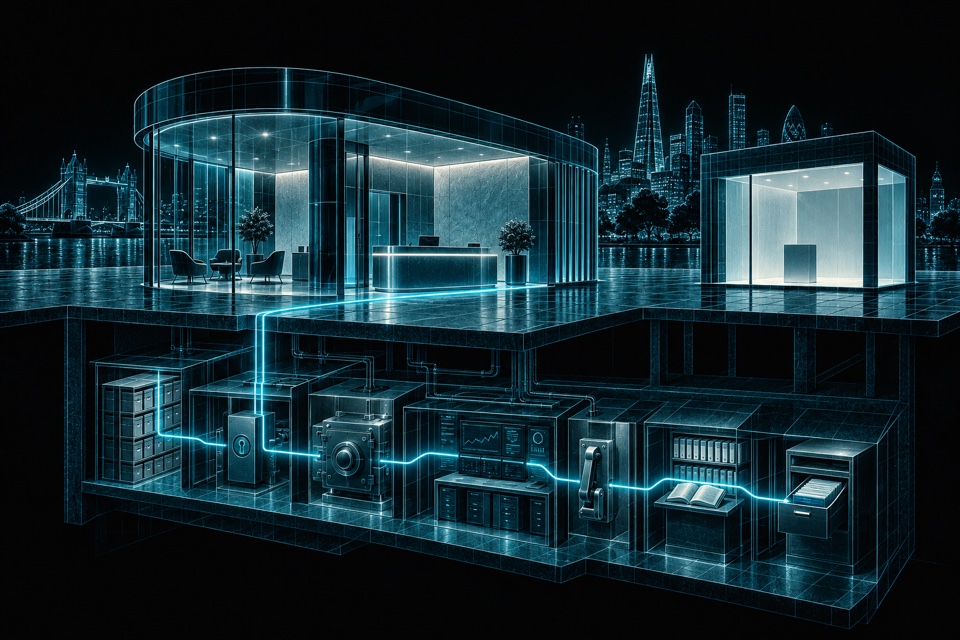
The product is the whole business job: the useful first interaction, the awkward exception, the permissions, the correction, the retained record, the person responsible for a decision and the route back when something fails. If those parts are postponed, the customer does not have a small product; they have a demonstration and an operating problem.
Our first task is to write the real job down. We ask the sponsor and the people who do the work what success and failure look like, then turn that into a versioned specification: workflows, decisions, data, integrations, accessibility, security, operating cost, migration, recovery and acceptance evidence. That document becomes the build and the price boundary, not a polished slide that evaporates when coding starts.
Build and prove together
AI helps us explore and implement quickly, but a model does not get to declare a consequential workflow correct. The specification is translated into checks that can fail: behaviour read back after a transaction, permissions challenged across roles, failure and retry paths exercised, critical calculations compared with their explicit rules. A defect changes the plan or the code; it does not quietly change the meaning of “done”.
We build for actual deployment from the outset. Cloud hosting, monitoring, backups or recovery paths, cost controls, accessibility and the ability for another operator to diagnose the service are design concerns, not a final-week appendix. We also plan for ownership: agreed product IP, source, data export and operating knowledge have to survive a change of supplier. The exact security and continuity controls are specified for the product and its data; no marketing page can certify a system that has not yet been built.
Phoenix Ember is a public example of a live school product built for a domain founder, not a template that can be stamped onto every client. Its real demonstration interface and status show more than a landing-page promise; the PECTECH case record explains our supplier role and what is measured. A buyer can inspect the method and its limits before commissioning a different job.
Scope and price
The Spec Compile & Build Plan produces the agreed boundary and fixed-price build quote. Feature-Complete Product Build is the commissioned delivery against it. A Verification Harness can also be built for an existing estate or a particularly consequential workflow. Handover is a running service, source and tests, a repeatable verification corpus, runbooks, recovery procedure and named remaining risks—not a video of someone clicking through a happy path.
What happens after launch?
Launch is not the moment everyone discovers that the software has no owner. Before release, the written agreement says who holds the cloud account and credentials, who watches the service, how incidents are raised, which defects are corrected as part of delivery, how later changes are commissioned, and how data and responsibility move if the relationship ends. The precise response times and continuity controls belong to that agreement; we do not paste a fictional universal SLA onto every product.
There are three honest ways to continue:
You take it over
We hand over the running service, source, data and export routes, tests and verification evidence, deployment and recovery instructions, account access and the knowledge needed to operate it. Named defects inside the accepted build boundary are dealt with as agreed; new capability is new work. The exit has to be usable by your team or your next supplier, not technically possible only while we still hold the keys.
We operate it together
Zero Drift can continue hosting, maintaining and changing the product under a written operating agreement. That agreement names ownership, monitoring and backup duties, incident contacts, response expectations, release authority, included maintenance and how separately commissioned changes enter the product. You retain a practical export and termination route throughout.
We run the engineering under revenue share
For a qualified founder-led product, Zero Drift can remain responsible for the engineering operation under the agreed revenue-share model. Product authority, customer responsibility, infrastructure cost, support boundaries, defect correction, later investment and exit are written down alongside the revenue base and cap. Revenue share changes who funds the engineering; it does not make operational responsibility vague.
If you have a hard product problem, bring the business job. We will test whether the work is sufficiently defined to price, and identify the decisions that need resolving first.